The Future of Testers in the AI Era: Thriving, Not Disappearing
"If you're a software tester, you might be wondering if AI will replace you. The answer is no” but AI will transform how you work. Learn what's changing in software testing, how testers are adapting with AI tools, and why skilled QA professionals have never been more valuable than they are right now."
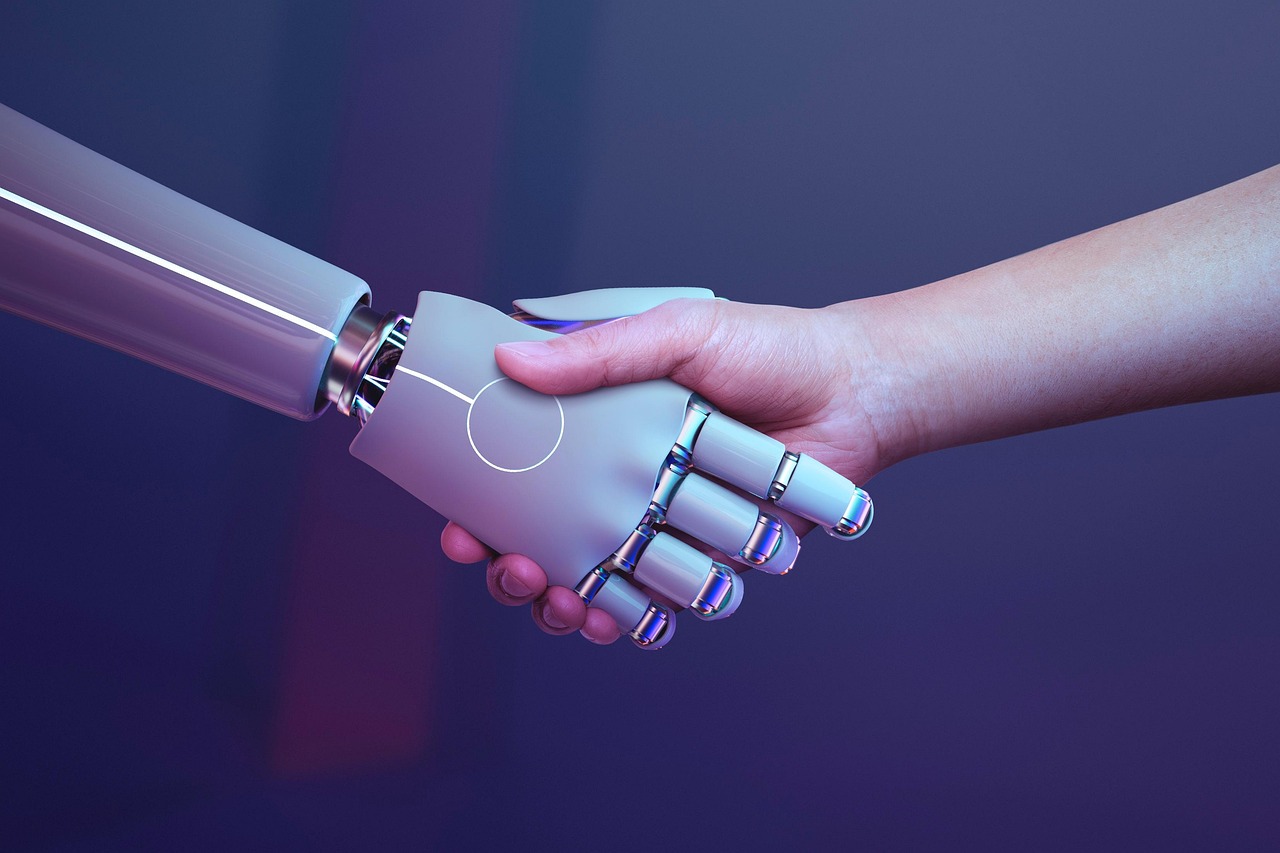
If you're a software tester reading this, I have some good news: AI isn't coming to replace you. Instead, it's coming to transform how you work—in ways that can actually make your career more fulfilling, strategic, and yes, even more secure.
But let's be real. Change is happening fast, and if you're standing still, you'll get left behind. The software testing landscape of 2026 looks nothing like it did five years ago. Let me walk you through what's changing, how testers are adapting, and what this all means for you.
The Massive Shift: What's Changing in Software Testing Right Now
The AI Revolution is Already Here
Walk into any QA department in 2026, and you won't see testers mindlessly clicking through test cases like they did a decade ago. Instead, you'll see AI systems generating test cases automatically, self-healing test scripts that adapt when your app changes, and predictive analytics that flag bugs before they even happen.
The big changes reshaping the industry look something like this:
Autonomous Test Generation
AI algorithms now analyze your code, user interfaces, and user behavior patterns to generate relevant test cases automatically. What used to take weeks of manual effort now takes hours. More importantly, AI finds edge cases and scenarios that human testers would miss—it's like having a tireless, creative testing assistant that never gets bored.
Self-Healing Test Scripts
Remember the nightmare of maintaining hundreds of automated tests? Every time the UI changed slightly, your entire test suite broke. AI changes that game. Self-healing automation scripts now adapt to application changes automatically, updating themselves without human intervention. This is huge because test maintenance used to consume about 30% of testing time.
Shift-Left and Shift-Right Testing
Testing isn't stuck in the middle of development anymore. With AI, teams test early (shift-left) during development to catch vulnerabilities in code before they become problems. They also test post-release (shift-right) by analyzing real user behavior to refine future test coverage. It's like having quality assurance at every stage of the software journey.
Hyper-Automation
This isn't just automation anymore—it's hyper-automation. AI now handles the entire testing lifecycle: test case creation, execution, analysis, and defect detection. It all happens in an integrated, intelligent way. Teams can automate test design, not just test execution, which fundamentally changes how testing scales.
Predictive Quality
Instead of waiting for bugs to happen, AI now predicts where they'll occur based on historical data, code changes, and past defect patterns. Teams can focus resources on the riskiest areas first. It's the difference between being reactive and proactive—and proactive always wins.
Why This Matters for You
Here's what this means in practical terms: The testing industry is growing 16.4% annually, nearly every company now uses automation, and 58% of enterprises are actively upskilling their QA teams in AI tools. This isn't a future trend—it's happening now. The question isn't whether AI will change testing; it's whether you'll change with it.
How Testers Are Actually Adapting
The smart testers I'm hearing about aren't panicking—they're evolving. The most interesting trend is the emergence of the "hybrid tester."
The Rise of the Hybrid Tester
High-maturity QA teams are 1.3x more likely to use AI for test optimization and 1.8x more likely to apply AI to maintain and update tests as products evolve. What are they doing differently? They're creating hybrid testers—professionals who blend sharp human intuition with machine-augmented efficiency.
A hybrid tester doesn't just execute tests anymore. Instead, they:
- Design intelligent testing strategies that leverage AI tools for execution while maintaining human oversight
- Validate AI-generated outputs by reviewing test cases, defect reports, and predictions with critical judgment
- Focus on what AI can't do: exploratory testing, assessing user experience, understanding business context, and making strategic decisions about what matters
Think of it this way: AI handles the "what" and the "how," but testers handle the "why" and the strategic decisions.
The Four Big Role Shifts
If you're in testing, expect your role to evolve in these fundamental ways:
1. From Test Executor to Test Orchestrator
You'll stop spending hours manually executing test cases. Instead, you'll design testing strategies, decide what to prioritize, and orchestrate AI tools to do the heavy lifting. It's a shift from doing to thinking—and that's where real value lives.
2. From Reactive to Predictive
Rather than finding bugs after they happen, you'll use AI to anticipate issues before they occur. You'll analyze predictive models, identify high-risk areas, and prevent problems from reaching production. This is genuinely strategic work.
3. From Isolated Testing to Quality Advocacy
You're no longer confined to the QA department. As AI handles routine testing, you'll engage throughout the development lifecycle as a quality champion—advising developers, stakeholders, and product teams on quality risks and trade-offs.
4. From Implementer to Advisor
While AI manages the details, you become an advisor who aligns quality efforts with business goals. You're guiding critical decisions, not just executing tasks.
The New Skills Every Tester Needs (Whether You're Ready or Not)
If you asked me in 2020 what skills QA engineers needed, I'd say automation and domain knowledge. In 2026? That's just the baseline. Here are the skills separating tomorrow's leaders from those left behind:
Essential AI & ML Fundamentals
You don't need to be a machine learning expert, but you need to understand how AI works. This means knowing about natural language processing (NLP), machine learning models, bias detection, and how AI systems behave probabilistically. Why? Because you'll be testing AI-powered software—chatbots, recommendation engines, LLM-based applications—and without understanding how they work, you can't effectively validate them.
Real example: A tester validating an AI chatbot without understanding NLP would miss bias issues or inconsistent responses across different phrasings of the same question.
Proficiency with AI-Powered Testing Tools
Tools like Applitools, Mabl, Testim, and others are no longer "nice to have"—they're essential. A team using traditional Selenium spends 30% of its time maintaining broken locators. That same team using AI-powered tools with visual recognition reduces maintenance time by 60%. The gap is massive.
Prompt Engineering
Generative AI is now part of the testing workflow. Being able to write effective prompts—instructing AI to generate test cases, scripts, or defect analysis—is becoming as important as knowing SQL. You might prompt ChatGPT: "Generate 10 edge test cases for a healthcare app's login module, focusing on authentication errors, expired tokens, and multi-device access." It works. And it saves hours.
Predictive Analytics & Data-Driven Testing
Understanding how to read and interpret predictive models is crucial. Teams using ML-based predictive analytics identified modules with high defect probability and reduced post-release bugs by 37% in one quarter. That's not luck—that's skill.
Testing AI and LLM-Based Applications
This is brand new territory. AI testing isn't just about using AI tools; it's about testing AI itself. You need to validate accuracy, bias, fairness, and consistency in AI models. A fintech team testing an AI credit recommendation engine detected demographic bias—preventing a regulatory disaster.
The Soft Skills That AI Can Never Automate
Here's something critical: Not everything is getting automated. Exploratory testing still requires human insight. It requires curiosity, creativity, critical thinking, and the ability to ask "what if?" in unexpected ways. A human tester finding an application behaving oddly can stop, dig into it, follow intuition, and discover problems that automated scripts would miss.
Domain expertise matters too. AI lacks contextual understanding of business logic, user experience nuances, and industry regulations. In healthcare, finance, or defense, human judgment about what matters is irreplaceable.
The Good: The Real Pros of AI in Testing
Let's be honest about what AI gets right. These aren't marketing claims—they're backed by real implementations:
✓ Speed and Efficiency
AI testing reduces regression cycles dramatically. A 50% reduction in test case maintenance time is common. Execution times shrink from hours to minutes. With continuous testing integrated into CI/CD pipelines, teams get real-time feedback after every code commit.
✓ Better Coverage
AI identifies gaps in test scenarios and generates test cases for edge cases humans might miss. This leads to more comprehensive testing without bloat. Some teams report testing areas that were previously untestable due to complexity.
✓ Accuracy and Predictive Insight
AI analyzes vast datasets to predict where bugs are likely to occur, identify patterns humans would miss, and focus efforts on high-risk areas. Certified testers already catch over 99% of defects; AI helps them do it faster and smarter.
✓ Scalability Without Scaling Headcount
Modern teams aren't hiring more testers to keep pace with faster development. They're scaling testing with AI. Parallel test execution across devices, browsers, and environments becomes practical.
✓ Cost Savings (Long-Term)
Yes, there's an upfront investment. But consider: maintaining a large manual testing team is expensive. AI-powered automation reduces that burden significantly over time. Organizations embracing AI-driven testing see higher productivity, faster time to market, and lower long-term costs.
✓ Learning and Adaptation
AI systems learn from each test cycle. They adapt test strategies based on previous outcomes, improving accuracy and coverage continuously without human rewriting of scripts.
✓ Job Security for Skilled Testers
Here's the real story: 75% of organizations are investing in AI for QA. And they're specifically upskilling existing testers rather than replacing them. The demand for skilled, certified QA professionals actually increases when AI is introduced—because someone needs to validate AI outputs, ensure ethical testing, and maintain oversight.
The Challenges: The Real Cons We Need to Talk About
But let's not sugarcoat it. AI in testing comes with serious challenges that teams are grappling with right now:
✗ High Upfront Investment
Implementing AI-based testing isn't cheap. We're talking infrastructure, tool licensing (Applitools and Testim scale into serious money), training, and hiring AI expertise. For smaller organizations, this can be prohibitive. You're looking at significant budget allocation upfront before seeing ROI.
✗ Talent Shortage and Expertise Gap
Here's a real problem: there's a shortage of people who understand both software testing AND AI. Integration complexity demands this hybrid skillset, and it's scarce. Many organizations struggle to find talent capable of managing AI systems and reviewing AI-generated outputs.
✗ Data Dependency and Garbage-In, Garbage-Out
AI models are only as good as their training data. Poor quality data, biased datasets, or insufficient historical data leads to inaccurate predictions and unreliable defect detection. A startup building a healthcare app with no historical defect data can't effectively use AI predictions because there's nothing to learn from.
✗ The Black Box Problem
Many AI models make decisions without transparent reasoning. For safety-critical applications (healthcare, automotive, aviation), this opacity is risky. Regulators and stakeholders often demand to know why an AI flagged something as a defect, and "the model said so" isn't acceptable.
✗ AI Can't Replace Human Judgment
This is crucial: AI can't do exploratory testing, usability assessment, or contextual evaluation. When a tester notices something feels "off" about the UI or user flow, they can investigate intuitively. AI can't do that. AI also lacks domain-specific understanding of business rules, industry regulations, and what actually matters to users.
✗ Ethical and Bias Risks
AI systems inherit biases from training data and can perpetuate them. Testing an AI application without validating for bias, fairness, and ethical behavior is a liability. This is especially critical in hiring, lending, healthcare, and other high-stakes domains.
✗ False Confidence and Over-Reliance
Teams sometimes trust AI outputs too much, reducing human oversight. This can lead to test gaps, misclassifications, and false alarms that waste debugging effort. The irony: AI was supposed to save time, but inadequate review of AI outputs negates those gains.
✗ Complex Integration Challenges
Integrating AI into legacy systems, existing CI/CD pipelines, and complex architectures is complicated. Customization is often needed, and the learning curve is steep.
✗ AI Struggles with Complex Scenarios
Testing complex workflows requiring understanding of broad parameters (historical data, user intent, real-time adaptation) is still difficult for AI. Dynamic vulnerabilities, runtime conditions, and context-dependent issues elude current AI-driven testing.
What This Means: Job Security, Career Paths, and the Real Future
Let me address the elephant in the room: Will AI replace software testers?
The answer is definitively no—but with a crucial caveat: it will replace testers who don't adapt.
Here's why testers are actually more secure than almost any other profession:
1. Testers are gatekeepers for AI ethics and safety.
As AI systems become increasingly complex, the need for skilled testers to validate that AI systems adhere to ethical standards, legal requirements, and safety protocols becomes even more critical. AI cannot validate itself—human oversight is essential.
2. Certified testers catch 99% of defects
Significantly higher than non-certified staff. This track record creates real value and job security.
3. As software complexity increases, the need for quality assurance grows.
Faster development cycles, more complex architectures, and AI-generated code all require rigorous testing. The volume of testing isn't decreasing; it's shifting in nature.
4. The demand for skilled QA professionals increases with AI adoption.
58% of enterprises are upskilling QA teams in AI tools, not replacing them. Organizations need testers who understand both testing AND AI.
However—and this is important—testers who refuse to learn AI tools, upskill in automation, and adapt their role will find themselves struggling. The industry is moving decisively toward hybrid testers who leverage AI. In the ASTQB's words: "AI won't replace QA engineers—but QA engineers who use AI will replace those who don't."
What Should You Do Right Now?
If you're in testing, here's my practical advice:
Start with what you know.
If you're already doing manual testing, recognize that exploratory testing, user experience assessment, and critical thinking are now your superpowers. AI can't replicate these. Double down on them while learning automation.
Learn one AI testing tool deeply.
Pick Applitools, Mabl, Testim, or another platform that resonates with your current workflow. Don't try to learn everything—focus on mastering one tool and its capabilities.
Get basic AI/ML fundamentals.
You don't need a degree in machine learning. Understand concepts like training data, model accuracy, bias detection, and how predictive models work. This foundation shapes how you think about testing AI.
Embrace prompt engineering.
Start using ChatGPT or similar tools to generate test cases, scripts, and test data. It's powerful, practical, and gets you comfortable with AI as a collaborator.
Invest in certification.
Organizations value certified testers. Consider ISTQB Foundation Level or ISTQB AI Testing certification. Certified testers command higher salaries and have stronger job security.
Think strategically, not tactically.
Stop thinking "How do I execute this test?" and start thinking "What's the testing strategy here? What does AI handle? Where do I add judgment?" The shift from tactical executor to strategic orchestrator is where your real value lies.
The Bottom Line: This Is Honestly Your Moment
The software testing industry is at an inflection point. For the first time in a decade, testers have a genuine competitive advantage if they embrace change. The profession isn't being automated away—it's being elevated.
Testers who adapt are becoming quality strategists, AI validators, ethical gatekeepers, and trusted advisors in development teams. The work is more strategic, more impactful, and honestly more interesting than execution-focused testing ever was.
Yes, you need to upskill. Yes, there are real challenges with AI implementation. And yes, some organizations will mishandle this transition.
But testers who lean into this moment—learning AI tools, understanding machine learning, maintaining their human judgment, and shifting from execution to strategy—are positioning themselves for the best years of their careers.
The future of testing isn't about being replaced by AI. It's about testers and AI working together in ways that make software better, faster, and more reliable than either could achieve alone.
The question isn't whether AI will change your job. It will. The question is: are you going to lead that change or follow it?